Gravity · macOS menu bar utility

Finally see what’s eating your disk.

Gravity is a feather-light menu-bar companion for Finder. Open any folder and it shows live file and folder sizes — as a ring, a grid, or a bar. Turn on History and it also shows what grew, what shrank, and where your space went. One keystroke away and never in your way.

An oversized name for a tiny wittle utility. (Why the f*ck did I do that?)

Requires macOS 14+ · Apple Silicon & Intel · Free & open source

Out of space, and Finder is no help?

Finder shows names and dates — not what’s actually taking up room. So you right-click folder after folder, or install a bloated “cleaner” that wants a monthly fee.

  • Finder hides sizes

    “Get Info” on every folder, one at a time. No overview, ever.

  • Disk tools interrupt

    Stop what you’re doing, open a separate app, wait for a full scan.

  • Cleaners are heavy

    Bloated suites, scary “smart” deletions, and a subscription on top.

Gravity fixes the boring part: it shows you what’s big now — and remembers what changed while you weren’t looking.

History monitor

See what changed, not just what’s big.

Turn on History and Gravity takes quiet, scheduled snapshots of the folder you choose. Come back later to see exactly what grew, what shrank, and where the space went.

  • Follow the trail. Drill from your home folder into the directories responsible for a change.
  • Pick the window. Compare this session, the last hour, 12 or 24 hours, 7 days, or 30 days.
  • Act in Finder. Jump straight from any result to the real file or folder — Gravity never deletes it.

Off by default · Runs locally · You choose the folder, schedule, thresholds, and retention

7 days Mac 6d 4h
App 2d 7h

~

Net change +17.4 GB
  • Library +18.4 GB
  • Downloads −6.8 GB
  • Movies +4.1 GB
  • Xcode +1.7 GB

History compares quiet, scheduled snapshots. In this example it reveals 17.4 GB of net growth, led by Library and Movies, while Downloads freed 6.8 GB.
Folder watcher

Watch the exact moment something changes.

Hold Shift and click any graph segment, tile, or bar to temporarily monitor that file or folder. Then perform your test and let Gravity record the filesystem activity as it happens.

  • Target one thing. Watch a single file or an entire directory without running a system-wide scan.
  • See the real trail. Open a change burst to inspect created, modified, renamed, and removed paths.
  • Stop automatically. Use the default expiry, extend a monitor, or keep it running until you stop it.

Local FSEvents · Pauses through sleep and downtime · Reports actual active monitoring time

Project files 1 monitor

Folder Watcher starts with a Shift-click on a graph item. It groups live filesystem events, preserves the affected paths for drill-down, and stops at the monitor’s chosen deadline.

See it your way

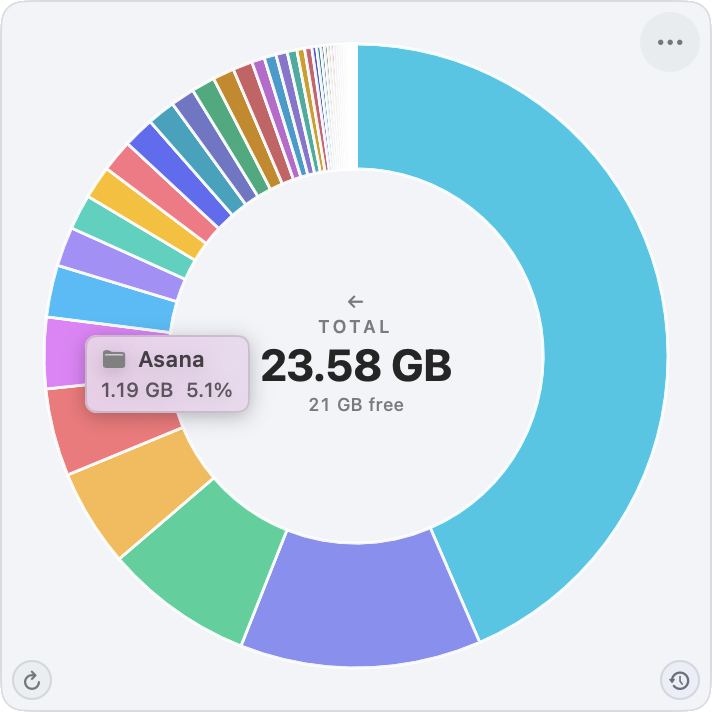
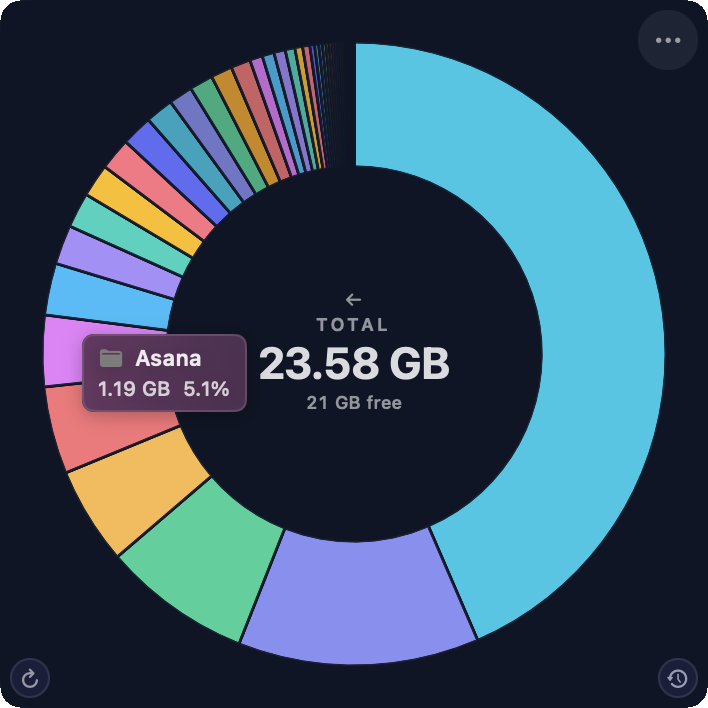
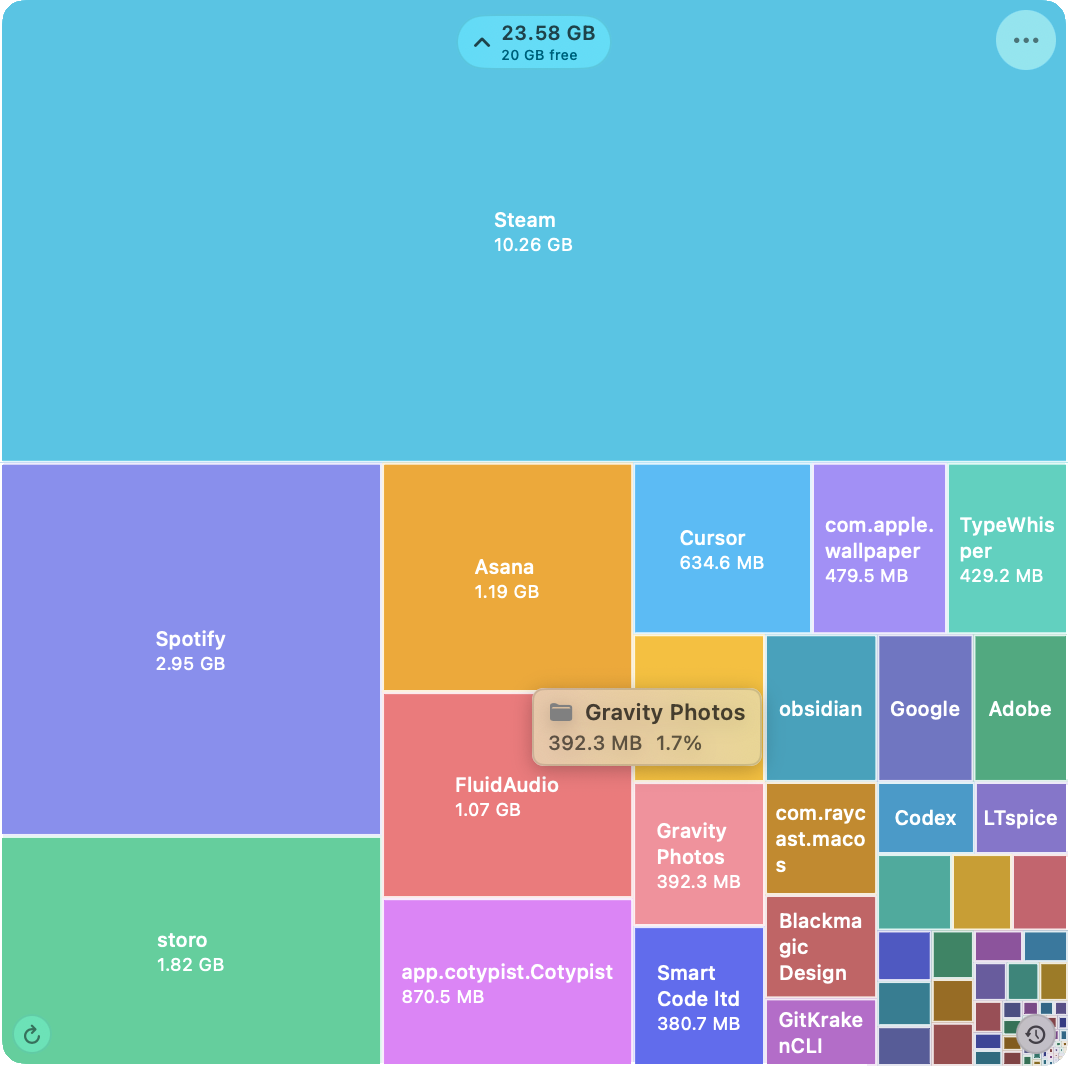
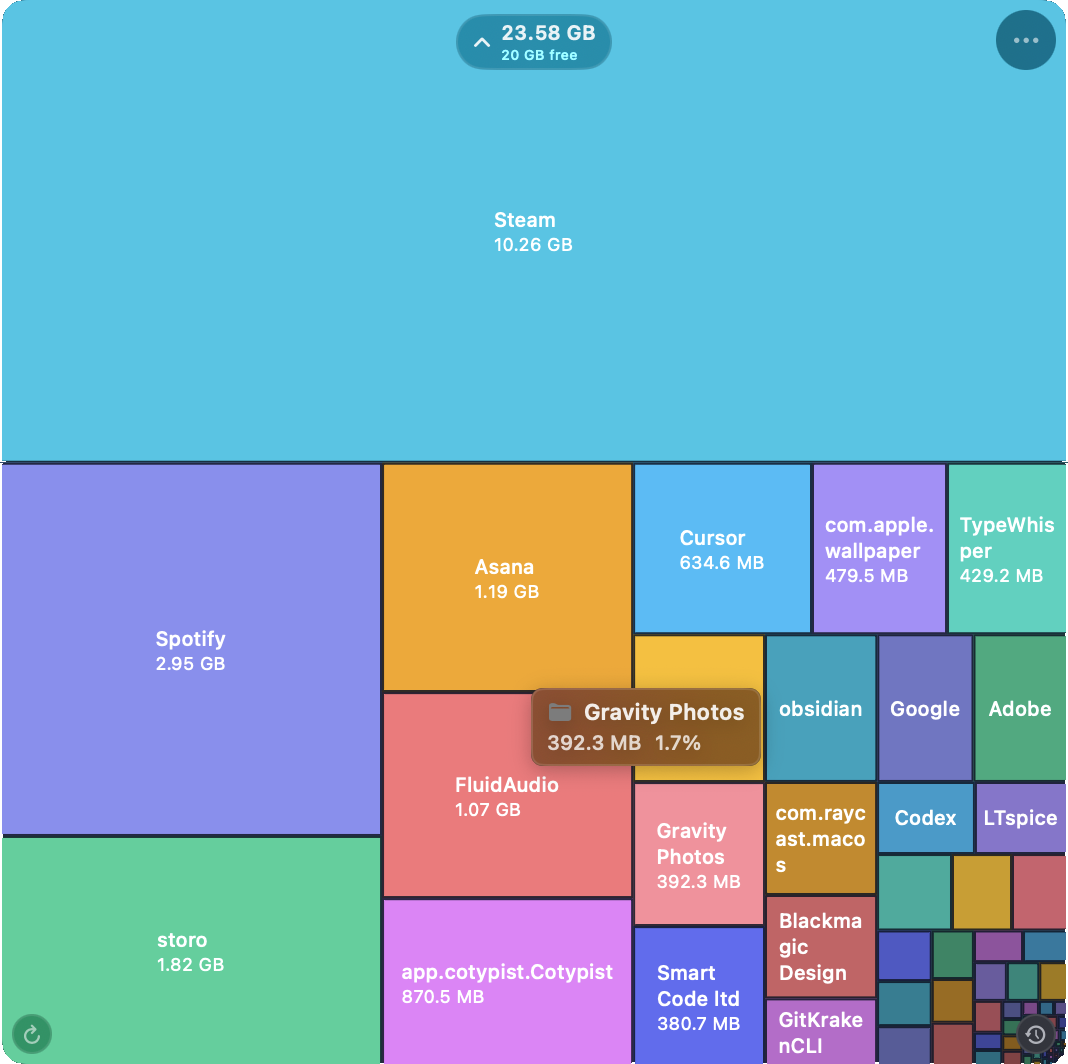
The ring up top, plus a grid and a bar — same live data, whichever view fits your brain. Switch instantly.

Grid — the classic treemap, biggest offenders up front.
Bar — a tidy storage bar, like the one on iOS.
  • Lives in Finder

    Follows whatever folder you have open. No separate app, no importing.

  • One keystroke

    Toggle the overlay with ⌃⇧G or the menu-bar scale icon.

  • Click to reveal

    Click any slice or tile to select that item in Finder instantly.

  • Remember what changed

    Opt in to scheduled snapshots and trace growth or freed space over time.

  • Never blocks you

    Sizes calculate in the background while you keep working.

  • Private by design

    Reads sizes locally. Never opens, moves, or transmits your files.

How it compares

Gravity does one thing well. Here’s how that stacks up against the usual suspects.

vs Finder

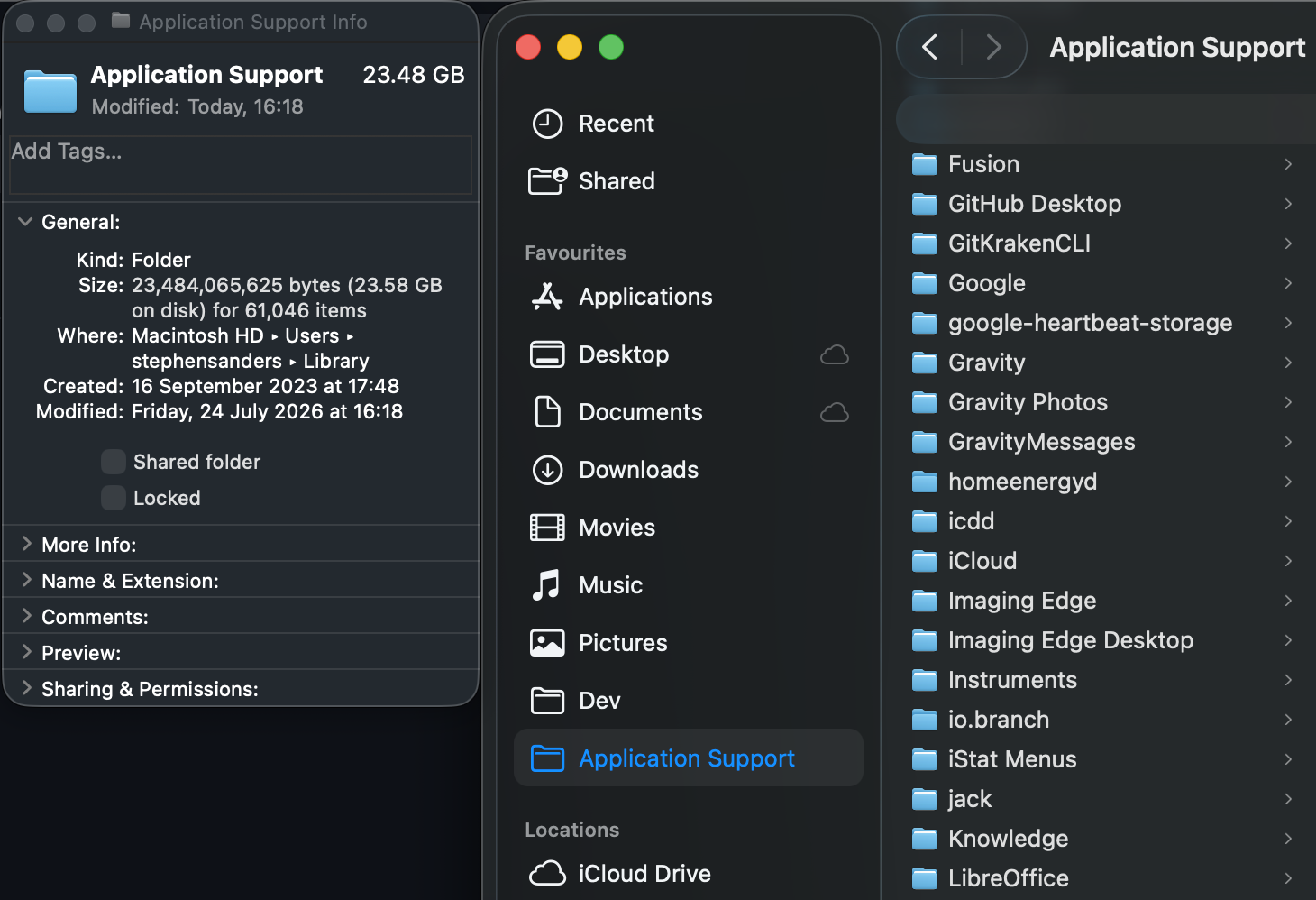
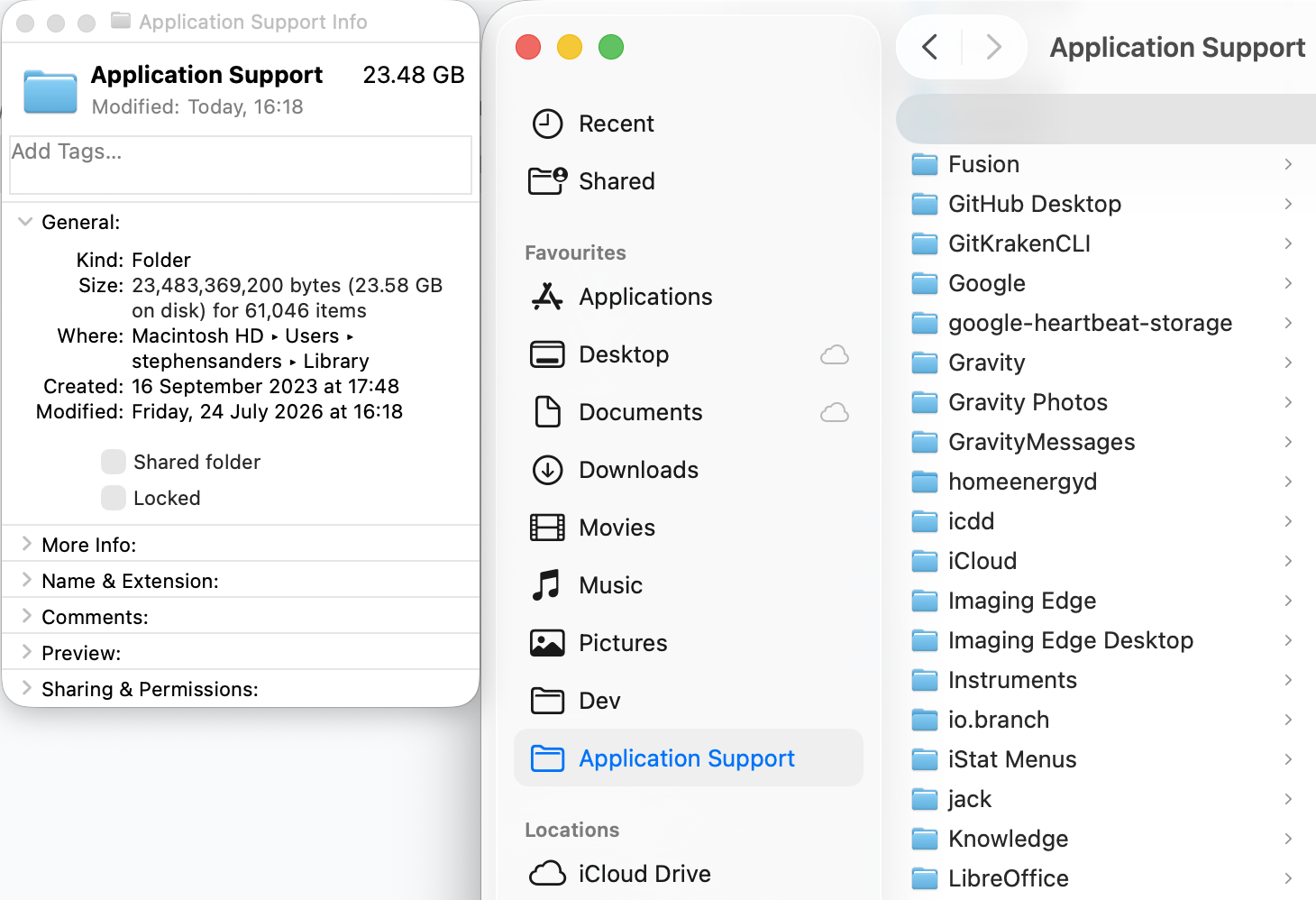
Finder file list showing names and dates but no size visualization
Finder
Gravity ring showing folder sizes at a glance
Gravity ring
  • Finder lists files but gives you no at-a-glance size breakdown
  • Gravity adds a live pie or grid overlay synced to your active Finder window
  • Click any slice to reveal and select it in Finder instantly
  • Updates automatically as files change — no manual refresh

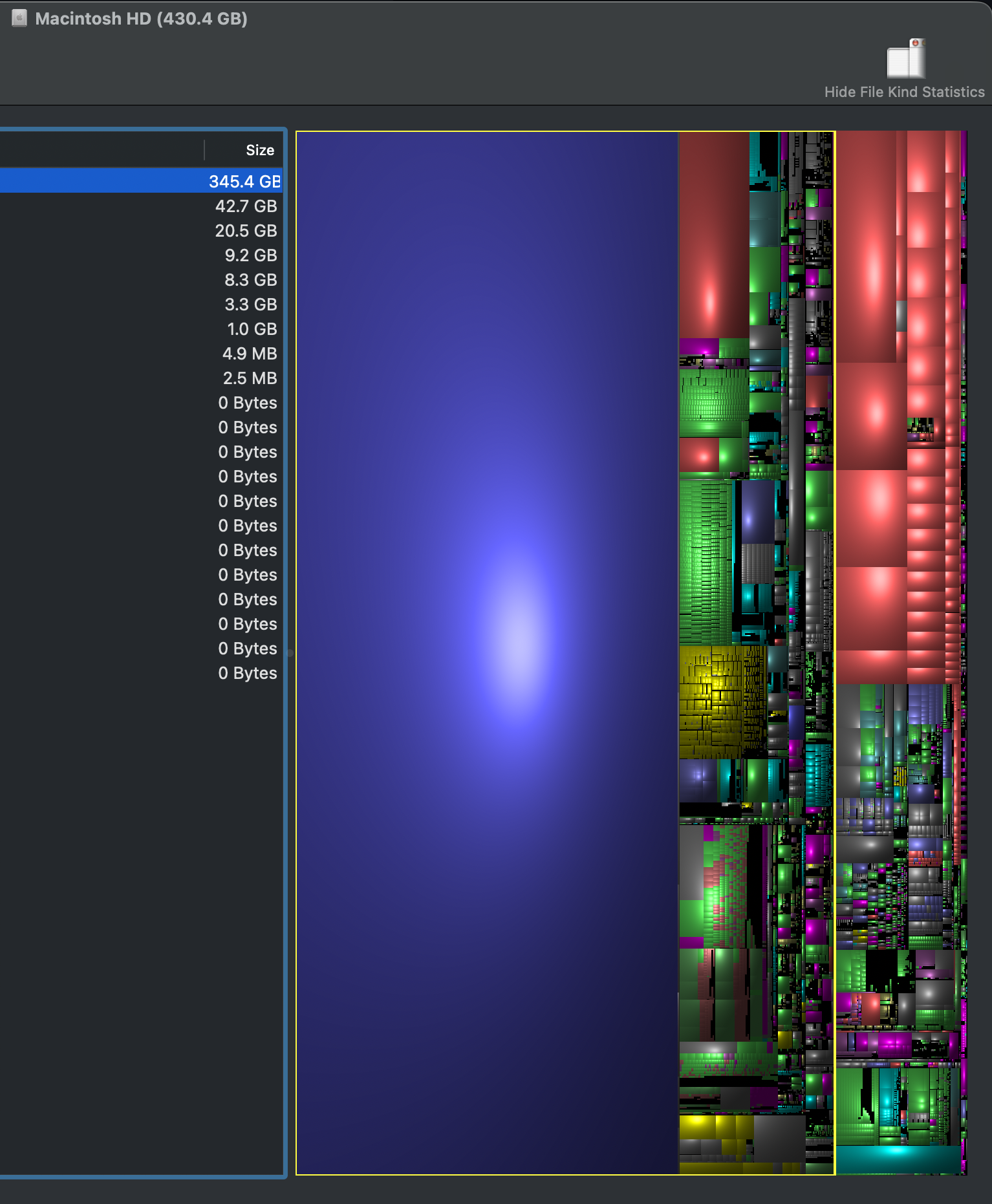
vs Disk Inventory X

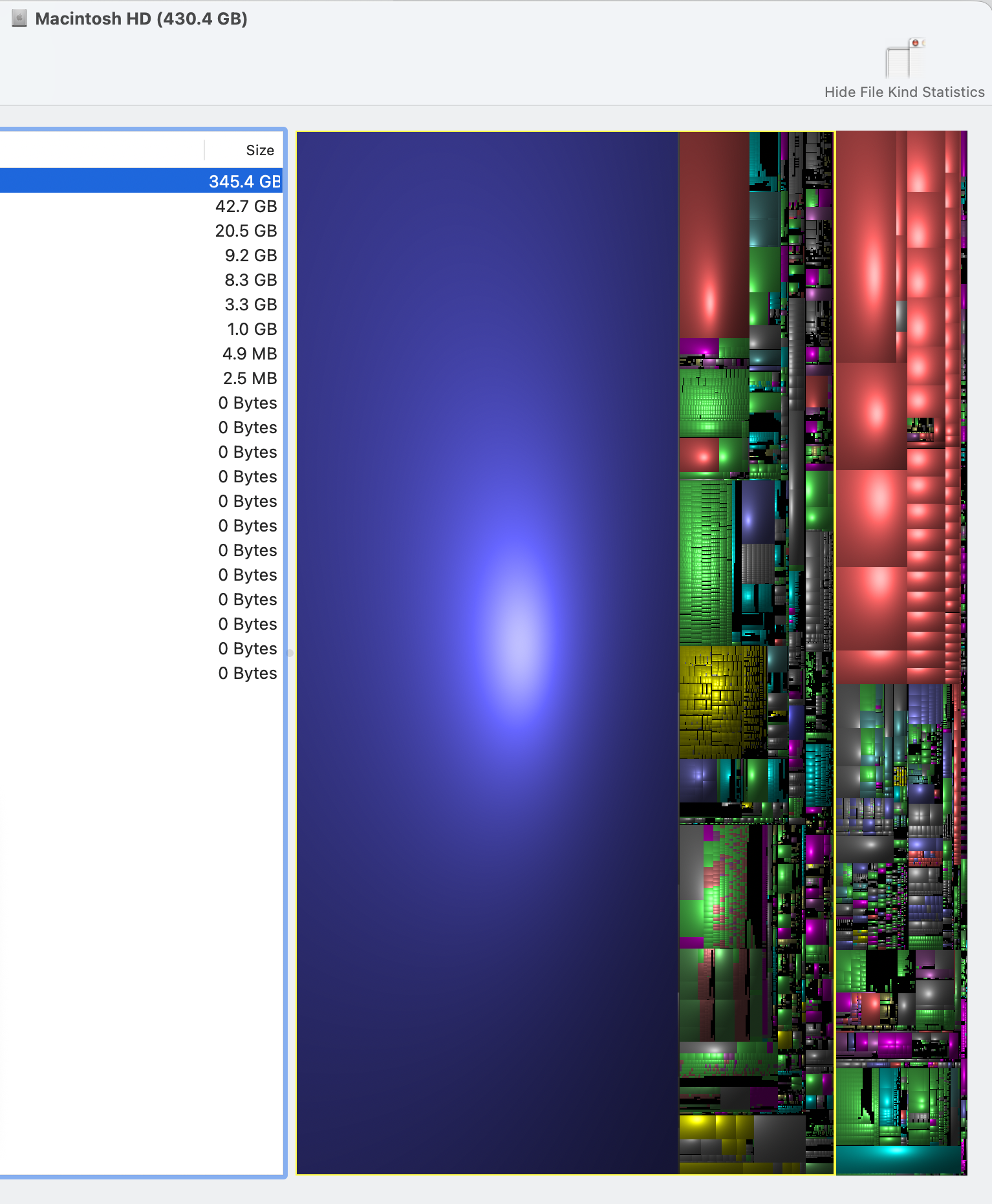
Disk Inventory X treemap visualization of disk usage
Disk Inventory X
Gravity’s grid view showing folder sizes immediately beside Finder
Gravity grid
Disk Inventory X Scanning…

A separate scan before you can explore.

Gravity Live

Open a folder and its live breakdown is already there.

  • Disk Inventory X pioneered the treemap — Gravity borrows that grid style
  • Separate app with its own scan workflow — not tied to Finder
  • Gravity lives in your menu bar and follows whatever folder Finder has open
  • Non-blocking background sizing — keep working while it calculates

vs CleanMyMac X

  • CleanMyMac X is a heavy suite with subscriptions and system-wide scans
  • Gravity is a tiny utility — reads sizes only, never moves or deletes files
  • No bloat, no upsells, no “smart cleanup” anxiety
  • Free. Actually free.

Pricing

It's free :)

Gravity is MIT-licensed and costs nothing. If it saves you five minutes hunting for what’s eating your disk, consider throwing a few bucks my way.

FAQ

STFU — this page answers it all

What does Gravity do?

Gravity watches the active Finder window and shows live file and folder sizes in a floating overlay. Toggle it with ⌃⇧G or click the scale icon in your menu bar. Switch between ring, grid, and bar views, click any item to select it in Finder, or turn on History to see what grew and shrank over time.

How does size history work?

History is optional and off by default. When you enable it, Gravity takes low-energy snapshots of a folder you choose on your chosen schedule. You can compare changes from this session through the last 30 days, drill into the folders responsible, and reveal any result in Finder. Everything stays local; you control the scan thresholds and how long raw history is kept.

Is it free?

Yes. Gravity is free and open source under the MIT license. No trial, no subscription, no “pro” tier. Donations are appreciated but never required.

What permissions does it need?

Automation (Finder) is required — macOS will prompt on first launch. Optionally, grant Full Disk Access to avoid repeated prompts when sizing protected libraries, and Accessibility for instant selection sync.

Does it upload or transmit my files?

No. Gravity only reads file sizes locally on your Mac. It never opens, moves, modifies, or transmits your files anywhere.

Is Gravity energy efficient?

Yes — Gravity is built to sip power, sizing only the folder Finder is showing and staying idle the rest of the time. The one thing that drives usage up is continuous rescanning: if the overlay is open on a directory whose contents change constantly — like your Library or home folder — Gravity keeps re-measuring it, which uses noticeably more energy than normal. If you’re browsing a busy folder like that, simply hiding the overlay (⌃⇧G) stops the rescanning. You can also add directories to skip in Settings, so Gravity never re-measures them automatically.

What macOS versions are supported?

Gravity requires macOS 14 (Sonoma) or later. It runs natively on Apple Silicon and Intel Macs.

How is this different from Disk Inventory X?

Disk Inventory X scans your whole disk in a separate app. Gravity is a menu bar companion that visualizes whatever folder Finder currently has open — live, non-blocking, and always one click away.

Why isn’t there a Dock icon?

Gravity is a menu bar app (LSUIElement). It lives near the clock as a scale icon and stays out of your Dock. Look for the scale symbol, or press ⌃⇧G.

Download isn’t working / no release yet?

Releases are published on GitHub Releases. If nothing is there yet, you can build from source with Xcode 15+.

Stop guessing. See your disk.

Free, open source, and out of your way in seconds.

Download for macOS

Requires macOS 14+ · Apple Silicon & Intel · No tracking, ever

Contact

Bug report, feature idea, or just saying hi — drop a line.

Form not working? Email directly at hello@example.com.